A Makeup Bag Reset Before a Weekend Away
A makeup bag reset for a weekend away helps you pack familiar makeup around the looks you want, with fewer loose items and easier touch-ups.
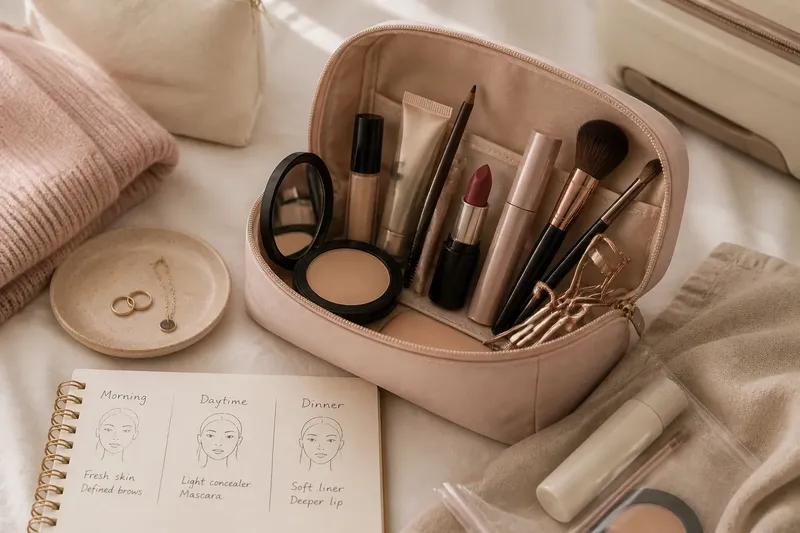
Which makeup do you actually want to wear on the weekend away? A makeup bag reset starts with that question, not with emptying every drawer into a pouch. Choose the looks first, then pack the familiar products and tools that make those looks possible.
A short trip tends to involve a small set of real occasions: breakfast before heading out, a daytime plan, perhaps dinner somewhere that calls for a little more polish. The useful packing decision is whether one adaptable routine will cover them, or whether you want separate daytime and evening options. Three approaches make that choice clearer.
Start with the occasions
Write down the looks you would genuinely choose for the trip. Keep the description visual and brief: “fresh skin and defined brows”, “soft liner for dinner”, or “lip colour I can reapply without a mirror”. This is more useful than a list of products because a look can often be achieved in more than one way.
Next, mark which looks share products. A brow pencil might serve both a simple daytime face and a more defined evening one; a familiar lipstick could be the only change needed between them. If a product appears in no planned look, it has to earn its space by serving a specific purpose such as correcting a makeup mishap.
Imagine you are leaving after work and have one evening out, followed by an unhurried morning. You want your usual defined brows, a little concealer during the day and a deeper lip at dinner. A pencil, concealer, compact powder if you normally use it, and the lip colour cover those stated preferences; a second palette makes less sense unless it creates a look you actually intend to wear.
Three packing approaches
The single-look edit
Pack one familiar face with a small number of products, perhaps a base item you already use, brow product, mascara and one lip colour. This suits a traveller who expects similar plans throughout the weekend, prefers a quick routine or would rather not decide between several options each morning.
Its limit is the look itself. If dinner calls for a clear change in mood, you may find that a minimal edit does not give you the detail you want. Choose this approach when repeating your preferred look feels intentional rather than merely convenient.
The day-and-evening pair
Pack a daytime set and one defined evening change. The second look need not be a complete second face: it might be a liner, a different lip product or a blush you already know how to use. This suits a weekend with one distinct occasion and someone who enjoys changing the emphasis of a look.
The extra option should have a clear job. If the evening item needs several additional products to make sense, it may be a whole separate routine disguised as a small addition. Choose this approach when one particular change matters more than having a broad range of choices.
The familiar mini-wardrobe
Pack a compact group of products that can be combined in several ways: a couple of complexion options, a familiar eye product and more than one lip choice, for example. This suits a traveller whose plans are uncertain or who enjoys adjusting makeup to clothing, light or mood.
Flexibility has a quiet cost: extra items need sorting, protecting and remembering. If you tend to reach for the same combination at home, a mini-wardrobe may simply make that combination harder to find. Choose it only when you expect to use the alternatives.
Makeup bag reset for weekends?
How many makeup looks should I pack?
Pack for the looks you expect to wear, not for every look you can imagine creating. A repeated everyday face plus one planned change is often a useful starting point, but your own itinerary and habits should decide the final selection.
Should I take full-size makeup?
Take a full-size item when it is the familiar format you use reliably and it fits the pouch without crowding other essentials. If you have a smaller version of the same product that you already know suits you, it may be easier to carry; a trip is a poor time to discover whether an unfamiliar substitute behaves well.
What makeup tools belong in a travel bag?
Bring only the tools needed for the chosen looks, such as a brush you rely on for a particular product or a sharpener for a pencil that needs one. If fingers are how you normally apply a product, there is little reason to pack a brush for it merely because brushes look organised.
How do I stop makeup spilling in my bag?
Check that caps and closures are secure, and keep products that could mark other items in a separate pouch or a washable section. Store pencils and brushes so that their tips do not press against powders, mirrors or clothing.
Choose tools by task
Tools are easiest to edit once the looks are set. A makeup brush earns a place if its shape or finish helps you apply a product in a way you prefer; it does not need to come along simply because it was part of the product’s original packaging. A compact sponge may make sense for someone who already uses one to blend a base, while another traveller may get on perfectly well with clean fingers.
Think about the small supporting items too. A pencil sharpener belongs only if you are taking a pencil that needs sharpening. A lash curler is useful to the person who uses it as part of their regular routine, not to someone who has never reached for it at home. Keep tools paired with the products they serve.
Brushes and sponges can pick up residue in transit, so separate them from clean clothing and from products that could be marked. A washable pouch or a dedicated compartment can make that separation simple. For anything that needs particular cleaning or storage, follow the maker’s instructions.
Use a two-pass edit
Lay out the products for your chosen approach and check each one against the looks you wrote down. Then use a second pass to question convenience items: backup lipstick, spare mascara, an extra brush and the palette that might be useful if plans change. Keep an item if it has a distinct purpose you can name; remove it if its only defence is that it is small.
- Base: choose the complexion product you already wear for the trip’s likely setting, or leave it out if you prefer a bare-skin look.
- Definition: select the brow, liner or mascara items that appear in the planned looks.
- Colour: pack the blush, eye colour or lip shade you intend to use, rather than several close alternatives with no separate role.
- Tools: include the brush, sponge, sharpener or curler you actually use with those products.
- Touch-ups: choose a compact or lip product only if you normally reach for it away from home.
- Containment: check closures and separate anything that could leak, crumble or leave marks.
The question for each item is simple: which planned look, application task or touch-up does it support? If there is no answer, it is probably not part of this trip’s makeup bag.
Keep the routine recognisable
Travel is not the ideal moment to trial a new foundation, a different mascara or a complicated application method. A new product can ask for extra tools or a different removal routine, and that makes the bag less predictable. Familiarity is especially useful when you are getting ready in an unfamiliar bathroom with limited counter space.
That does not mean every item must be a staple. An occasion-specific lip shade or eye product can belong if you already know how to use it and have chosen a look around it. The distinction is between a deliberate change and a speculative one.
Make the choice
Choose the single-look edit if your plans and preferences are steady. Choose the day-and-evening pair if one occasion calls for a specific, manageable change. Choose the familiar mini-wardrobe if you expect to vary your look and will enjoy using the extra options.
For a makeup bag reset before a weekend away, the best final check is to picture getting ready for each planned occasion and name the products you would reach for. Pack those, add the tools they require, and leave the rest at home. A little room in the pouch is not wasted space; it is where the zip closes without negotiating.